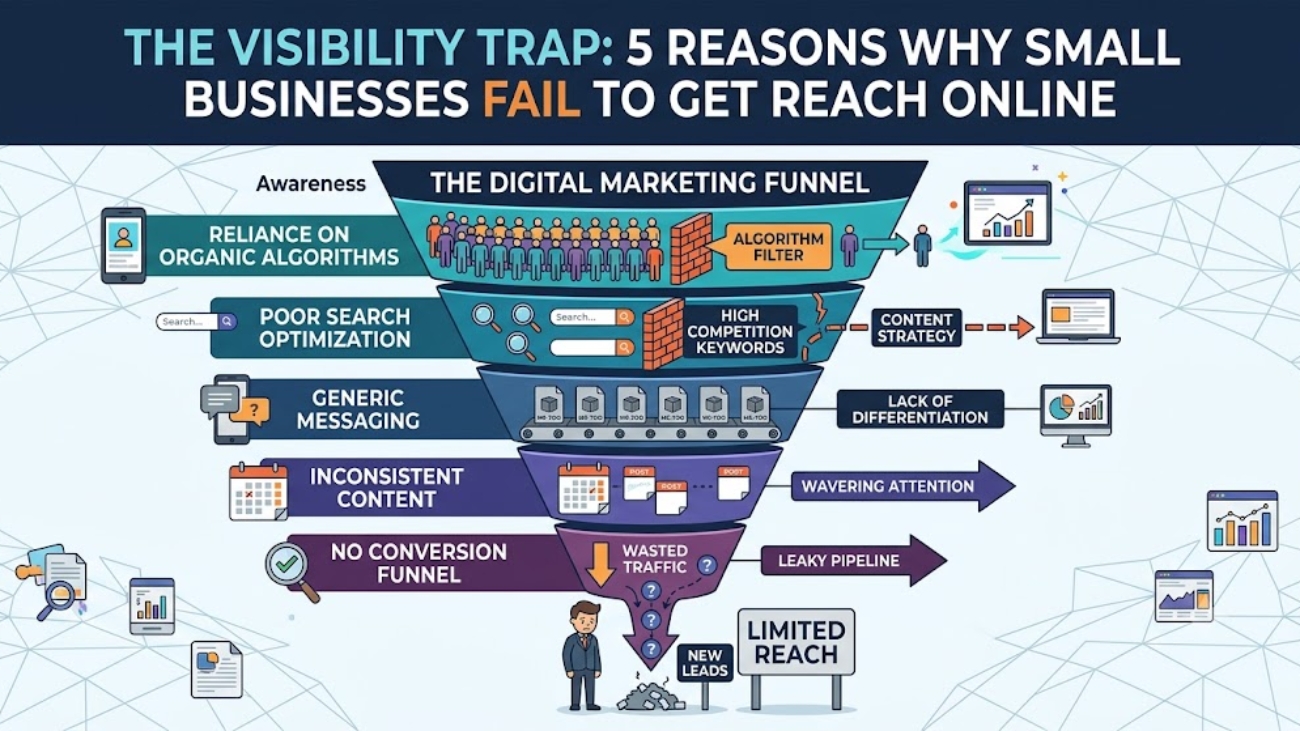
In today’s crowded market, aesthetics alone won’t cut it. When a new boutique café, an independent fashion label, or an emerging beauty brand comes to me, they usually share the same frustration:
“Our product is amazing, our visuals are pretty, but we aren’t seeing real business growth online.”
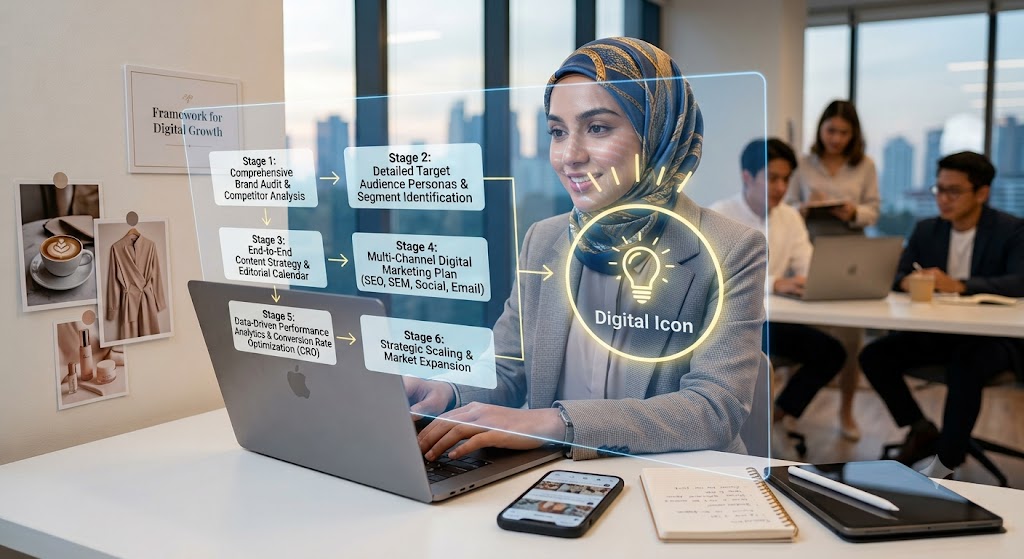
A strong brand isn’t just seen—it’s remembered. To achieve that, you need a delicate balance of creative storytelling and data-driven strategy.
Here is an inside look at my exact end-to-end digital marketing framework—from the moment a client steps through my virtual doors to the day we celebrate measurable, long-term growth.
Step 1: The Discovery & Deep-Dive Audit
Every successful partnership begins with understanding the brand’s heartbeat and diagnosing what is broken under the hood.
- Brand Alignment Session: We sit down to define your aesthetic, target audience, and core values. Are we capturing the cozy, artisanal vibe of a specialty café? Or the sharp, editorial edge of a luxury fashion label?
- The Free Technical SEO & Digital Audit: Before writing a single word or launching an ad, I run a comprehensive audit. We look at website speed, mobile responsiveness, broken links, and indexing issues.
- The Blueprint: Using my core rule—technical foundation first, content second, and authority third—I map out a customized roadmap tailored specifically to the client’s growth goals.
Step 2: Laying the Technical Foundation (WordPress Setup & SEO)
You can’t build a skyscraper on a cracked foundation. If a brand’s website is slow, clunky, or invisible on search engines, all the social media marketing in the world won’t save it.
- WordPress Website Setup: For clients needing a digital overhaul, I build responsive, lightning-fast, and user-friendly WordPress websites. Every button, layout, and image is optimized to reflect the brand’s unique identity while ensuring a seamless user experience (UX).
- Fixing the Technicals: I fix site errors, optimize meta tags, ensure mobile optimization, and set up tracking pixels so we can accurately measure every click and conversion moving forward.
Step 3: Crafting the Narrative (Content & Social Media Strategy)
Once the digital house is in order, it’s time to make some noise. This is where creative storytelling meets search intent.
- Content Marketing & SEO Blogs: I write SEO-friendly blog posts and website copy that rank on Google while genuinely helping the audience. For example, a beauty brand might get a high-ranking guide on “How to Build a Sustainable Skincare Routine,” driving organic, high-intent traffic.
- Social Media Marketing: We curate thumb-stopping content across Instagram, Facebook, WhatsApp, and LinkedIn. For lifestyle and beauty brands, this means high-aesthetic feeds, engaging Reels/TikTok concepts, interactive stories, and community management that turns passive scrollers into loyal brand advocates.
- Canva Design & Email Marketing: I design cohesive, on-brand graphics using Canva to maintain visual consistency. Simultaneously, we launch targeted email marketing campaigns (like welcome sequences and VIP lookbooks) to nurture leads and drive repeat purchases.
Step 4: Scaling Up (Performance Marketing)
With organic foundations laid and community engagement thriving, it’s time to pour fuel on the fire.
- Data-Driven Paid Ads: I design and manage performance marketing campaigns on platforms like Meta. Instead of just “boosting posts,” we target hyper-specific custom audiences based on purchasing behavior, interests, and past website visitors.
- Budget Optimization: Every dirham/dollar spent is tracked meticulously. We analyze cost-per-acquisition (CPA) and return on ad spend (ROAS, ensuring that paid traffic translates directly into booked tables, online clothing orders, or product restock sell-outs.
Step 5: Tracking, Tweaking, and Long-Term Growth
Digital marketing isn’t a “set-it-and-forget-it” checklist; it’s a living, breathing ecosystem.
- Continuous Optimization: We review analytics monthly. What blog posts are driving the most traffic? Which Instagram formats are getting shares? Which ad creative has the highest conversion rate?
- Iterative Growth: We double down on what works, tweak what doesn’t, and continuously scale the brand upward.
The Result
By blending creative, high-end visuals with a rigorous, data-backed strategy, my clients stop blending into the background. They get a digital presence that doesn’t just look beautiful—it attracts the right audience, builds lasting brand equity, and drives real, measurable revenue.