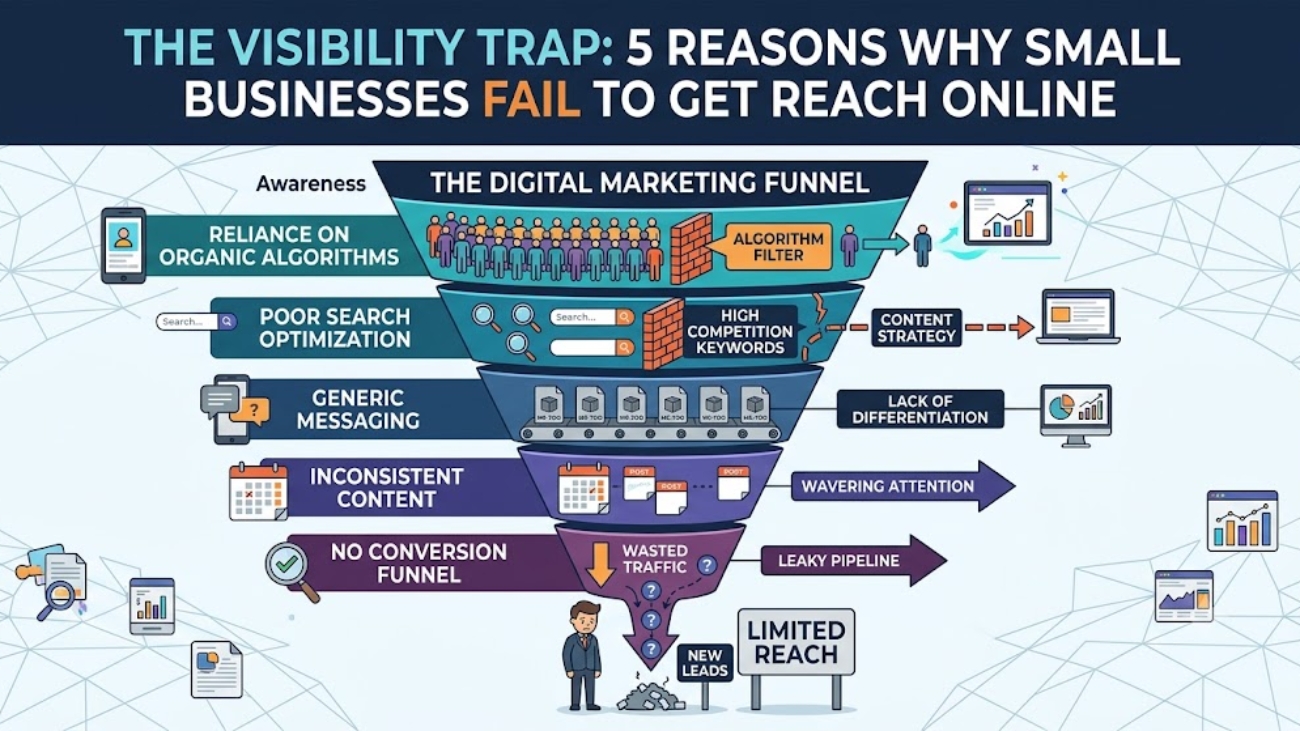
Gone are the days when a charming storefront sign, a gorgeous product, and local foot traffic were enough to sustain a small business. In today’s hyper-connected market, consumers don’t just stumble upon brands—they search, scroll, compare, and vet them online long before making a purchase decision.

Whether you run an artisanal café, an independent fashion label, or a specialized beauty brand, great products alone don’t guarantee growth. Visibility does.
If you are wondering whether digital marketing is truly a necessity or just an expensive corporate luxury, here is why a strategic digital presence is the ultimate survival tool for small businesses.
1. It Levels the Playing Field Against Corporate Giants
In the era of traditional advertising (billboards, TV, print), small businesses were instantly priced out. Big corporations dominated because they had massive budgets to blanket entire cities with ads.
Digital marketing changes the game. Through smart Search Engine Optimization (SEO) and targeted social media content, a boutique fashion label can rank right next to a global retailer on Google. By focusing on a solid technical foundation, hyper-relevant content, and genuine community engagement, small businesses can compete on relevance and creativity, not just cash flow.
2. Your Customers Are Living Online (Literally)
Think about your own daily habits. When you want to find a new place for coffee, look up an outfit inspiration, or check the reviews of a new skincare line, where do you go?
- You search on Google.
- You look up aesthetics and Reels on Instagram or TikTok.
- You check recommendations across social networks.
If your café or brand isn’t showing up where your audience is spending hours of their day, you are practically invisible. Digital marketing ensures that when a potential customer looks for what you offer, you are the answer they find.
3. Precision Targeting: Stop Throwing Money Away
Traditional marketing is like casting a massive net into the ocean and hoping you catch something valuable. Digital marketing is like using a spear.
Platforms like Instagram, Facebook, and Google allow small businesses to drill down into hyper-specific audience demographics:
- Location: Targeting local coffee lovers within a 5km radius of your café.
- Interests: Reaching individuals who actively follow sustainable fashion, luxury textiles, or clean beauty trends.
- Behavior: Showing ads to people who have visited your website before but didn’t check out.
This means every dollar you spend is optimized to reach people who actually care about your brand, maximizing your return on investment (ROI).
4. Aesthetics + Data = Sustainable Growth
As a creative brand, your visual identity is everything. But as we know, aesthetics alone aren’t enough.
Digital marketing bridges the gap between looking good and driving revenue.
- Creative storytelling captures the heart and soul of your brand.
- Data-driven strategy (like tracking website analytics, email open rates, and conversion metrics) tells you what is actually working.
By combining the two, you stop guessing what your audience wants and start making informed business decisions that scale.
5. Building Real Community and Long-Term Loyalty
For small businesses, your greatest asset isn’t a massive corporate budget—it’s intimacy and connection.
Through consistent social media marketing, engaging email newsletters, and interactive content, small brands can build micro-communities. Responding to comments on Instagram, sliding into WhatsApp chats with VIP customers, or sending an aesthetic weekly style edit transforms casual buyers into die-hard brand advocates.
The Bottom Line
Digital marketing isn’t just about “posting on social media”—it is the infrastructure of modern business growth. It builds your credibility, protects your brand visibility, and turns passive scrollers into loyal customers.
If you’re ready to stop blending into the background and build a digital footprint that matches the beauty and quality of your work, the time to invest in a strategic digital presence is right now.